4iB Records | For intrinsic Beliefs
Record Label dealing in Industrial, Power Electronics, Harsh Noise, Experimental, Death Industrial, Drone, Ambient, Japanese Noise, Field Recording, Abstract, Musique Concrete and other related genres.

SHROUD OF VAPOUR (Hiroshi Hasegawa/Rohco/L’eclipse Nue & Yoshiko Honda) – Suicide Forest Sessions CD Out Now!

SHROUD OF VAPOUR (Hiroshi Hasegawa/Rohco/L’eclipse Nue/Yoshiko Honda) – Suicide Forest Sessions CD (4iB013):
TRACK LISTING
1. In Memory Of (48:50)
2. If It Pleases The Deceased (19:09)
Details:
– CD in Jewel Case
– Limited Edition 250 Copies
PRICE (Including Airmail Shipping from Singapore): USD16
To Purchase, Please Click Here:

SHROUD OF VAPOUR (Hiroshi Hasegawa/Rohco/L’eclipse Nue & Yoshiko Honda) – Suicide Forest Sessions
Hiroshi Hasegawa, Rohco, L’eclipse Nue (Daniel Sine) and Yoshiko Honda collaborate with one another as Shroud of Vapour in this special project entitled Suicide Forest Sessions. The Suicide Forest in Aokigahara, Japan serves as the recording ground due to its strong historic association with demons in Japanese mythology as well as being a popular place for suicide in Japan. The dense forest and it’s still quiet void of almost all wildlife bring out the very nature of the artists true intent, reflecting the atmosphere of desolation and despair of a haunted suicide ground. The weaving in and out of distant female wails and ambient like soundscapes seem to echo the lost spirits of those that have chosen to take their own lives here. This entire project was recorded using only equipment that required no electricity and relied purely on battery power. Strangely enough, out of a total of 3 recordings that were done that day, only 2 were able to be retrieved, and are thus presented here in their true form.
SHROUD OF VAPOUR – Suicide Forest Sessions CD Review by Musique Machine.com (Roger Batty)
Shroud Of Vapour is a five piece collaborative project that brings together it’s members from the Japanese noise scene for a moody, mostly subdued and often chilling two track release on respected Singapore based noise/experimental label 4iB Records. This is the project’s first release.
The release comes in the form of a CD release, which features two tracks, each of these run between fifty & nineteen minutes a piece. And I guess it’s best to describe what we have here as a fairly loose & often woozy mix of unsettling & stripped electro ambience, subdued noisy improv/noise making, eerier vocalising, and the odd venture into more structured/noisy affair.
The release takes it’s name from Aokigahara, The Suicide Forest or Sea of Trees – a 35-square-kilometre forest situated on the northwest base of Mount Fuji in Japan. The forest is associated with demons in Japanese myth, and has been the site of many suicides (give or take around a 100 most years since the late 1980’s). Both tracks here were recorded live in the forest, using just battery powered & non electric elements.
The project brings together the following: Hiroshi Hasegawa (of C.C.C.C., Astro, and many other projects), ROHCO (also of C.C.C.C. & Astro), L’Eclipse Nue (Daniel Sine) & Yoshiko Honda.
Track one is entitled “In Memory Of” & comes in just shy of the forty nine minute mark. It languidly morphs and melts, wavering and haunting at times, almost operatic sing-song female wordless vocalising, through to stretched out & thinned noise tonal drift, onto sudden raised noise amassed textures, through to hazed & shapeless mixes of textural details, onto reduced down slightly spacey synth drift, & haunting feedback ebb ‘n’ shift. All in all the tracks are quite effective in it’s drifting, drowsy & slightly unsettling vibe, and one can almost imagine lost spirits floating & slowly shifting through the suicide forests landscape.
Track two comes in the form of “If It Pleases The Deceased”, and this track is just over nineteen minutes, which sees the five piece move towards a slightly more noise-bound feel – though it still has a haunted/loose vibe about it. The track opens with a mixture of walking or heart-beat pulse textured detail, & this is battered by on/off slams of what sounds like an organ fed through a distortion pedal – around this we get layers of ghostly moans & subdued female vocalising. As the track progresses, more wavering & sad harmonic keyboard hits can be made out, but around this you keep getting hits of textured & eerier noise matter, and retro synth flotsam & jetsam – and after a time the harmonic element departs. I guess you’d say the track falls somewhere between noised up ambience, weird séance like vocalising, and possibly a 60’s psychedelic freakout at it’s most loose and stripped down. The track is ok I guess, but I did find my attention starting to wander in places, so it certainly wasn’t as effective as the first.
So in summing up the idea of recording in the suicide forest is certainly an intriguing one, and the first track manages to capture the vibe of such a place nicely – I just felt there was a little less thought & atmosphere in the second track. So if you enjoy loose and often chilling sonics which hover somewhere between (mostly subdued) noise-making, improv and noisy ambience, you may well get something from this.
(Source: http://www.musiquemachine.com/reviews/reviews_template.php?id=5498)
=======================================================
Please direct all enquiries to:
4iB Records
PO Box 206
Singapore 914007
email: gerald@4ibrecords.com
www.4ibrecords.com
PSICOPOMPO (Hermann Kopp + Lorenzo Abattoir) – Synchronicity (Theory of Carl Jung) CD Out Now!
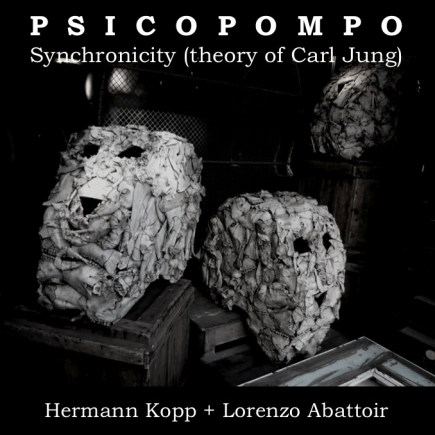
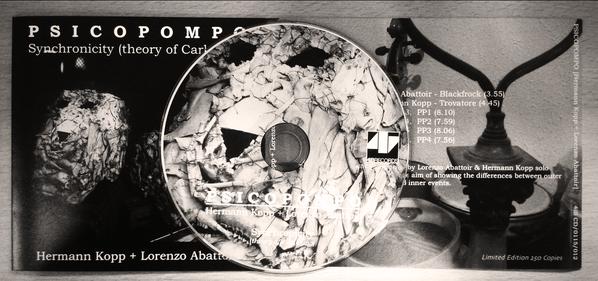
PSICOPOMPO (Hermann Kopp + Lorenzo Abattoir) – Synchronicity (Theory of Carl Jung) CD (4iB012):
TRACK LISTING
1. Lorenzo Abattoir – Blackfrock
2. Hermann Kopp – Trovatore
3. PP1
4. PP2
5. PP3
6. PP4
Details:
– CD in Jewel Case
– Limited Edition 250 Copies
PRICE (Including Airmail Shipping from Singapore): USD16
To Purchase, Please Click Here:
PSICOPOMPO (Hermann Kopp + Lorenzo Abattoir) – Synchronicity (Theory of Carl Jung)
Psicopompo is the death guide that accompanies the dying to the afterworld. Synchronicity is the occurrence of two or more events that appear to be meaningfully related but not causally related. From the conceptualization of these two themes combined, German composer/musician Hermann Kopp (of Jorg Buttgereit’s Nekromantik and Der Todesking soundtracks) and Italian Noise Experimentalist Lorenzo Abattoir (Nascitari) merge their unique compositional techniques and source equipment (Hermann Kopp: Violin, Tambourine, Electronics / Lorenzo Abattoir: Shruti Box, Timbal & electronics), leaving the results entirely to chance. The final result is the unity of an audio event joining together 2 separate executions of melody and rhythm without any post production or added effects, bringing out the forlorn emotions of being on the journey to the new world upon death.
Review by Emiliano Zanotti
(http://www.sodapop.it/rbrth/reviews/2200-hermann-kopp-lorenzo-abattoir-psicopompo-4ib-2015.html)
Hermann Kopp e Lorenzo Abattoir non si sono mai incontrati, magari non lo faranno neppure mai. Si incontra però la loro musica, nel segno della sperimentazione (non solo sonora), di Carl Jung (attraverso la teoria della sincronicità) e del viaggio nell’oltretomba, a cui fa riferimento il titolo.
Per Jung la sincronicità è la connessione fra due eventi che avvengono contemporaneamente, non legati da una relazione causa-effetto ma da un’evidente comunanza di significati, evento che suggerisce l’esistenza di un altro ordine di realtà. Da questa idea parte l’anomalo duo, anomalo perché predisposto per suonare, nel medesimo momento ma in luoghi diversi (Kopp a Barcellona, Abattoir a Cuneo), segmenti musicali di otto minuti, per poi ricreare l’unità di spazio attraverso il mixaggio. Ne nasce un lavoro dalle tinte fosche, ascrivibile al mare magnum della classica contemporanea, fatto di duetti fra violino, percussioni, voci, elettronica e significativi silenzi e dove l’apparato teorico – illustrato esaurientemente nelle note – non appesantisce l’ascolto, che rimane un’esperienza assolutamente autonoma e significativa. Se volessimo rappresentare graficamente Psicopompo, disegneremmo due linee che viaggiano parallele o divergono, a seconda che si abbiano sintonie, davvero sorprendenti considerato il modus operandi, o più prevedibili dissonanze. Ma il discorso non si esaurisce qui, perché se alcune parti sono oggettivamente riuscite, altre, “sbagliate” secondo le comuni regole musicali, potrebbero comunque parlare alla sensibilità dell’ascoltatore, che saprà cogliere sintonie prima sfuggite e a loro volta destinate a sparire negli ascolti successivi. A ben vedere l’idea forte che anima questo lavoro, ancor più dell’apparato teorico, è quella di usare la musica come mezzo privilegiato per indagare gli aspetti più oscuri e liminali della realtà: Psicopompo non è un disco perfetto -non avrebbe potuto esserlo senza tradire l’idea di partenza- ma pone alla portata di tutti un’esperienza davvero unica e speciale.
Review by The New Noise
(http://www.thenewnoise.it/psicopompo-synchronicity-theory-of-carl-jung/#sthash.C79u5fk2.dpuf)
Bastava anche solo Synchronicity eh. Non c’era bisogno di complicare la vita inserendo come sottotitolo Theory Of Carl Jung (battuta). Credo nel paranormale e nelle casualità, ma di teorie di psicoanalisi non so nulla, e, anche volendo, non le capirei (comunque nel booklet è, a grandi linee, spiegata bene). Magari chi l’ha studiata parte in vantaggio e riuscirà ad apprezzare meglio il disco. Io preferisco di gran lunga scendere in cantina e rileggere i testi di aerotecnica o termodinamica, osservando saldature e tubazioni d’acciaio e ascoltando nel frattempo ogni tipologia di rumore d’impianti industriali. Semplicemente visioni o filosofie diverse, non prendetela male. L’unica maniera che rimane per analizzare il disco è quindi da ricercarsi nell’ottima sincronicità sonora (a questo punto meglio scrivere sincronismo), derivante dall’assemblaggio di approcci, idee, stili ed epoche differenti. Psicopompo è la collaborazione fra il tedesco Hermann Kopp (veterano della NDW coi Keine Ahnung e poi in solitario facendo stridulare le corde del proprio violino) e il piemontese Lorenzo Abbatoir, che nel giro del noise italiano che conta conosciamo come Nascitari. Non vi è nulla che rimandi ad officine meccaniche, plastica e cyberpunk, state tranquilli, sarei più matto di quel che sembro se scrivessi qualcosa del genere. Ci sono però avanguardia e meditazione. Essenzialità dell’anima e purezza dei suoni. Ma anche silenzio e annullamento di ogni forma geometrica tridimensionale. È come se le necroromanticherie industrial di Kopp fossero dei multicolori colpi di pennello gettati a random su uno sfondo monocromatico, lisergico e rituale, scaturito dalle menti malate dei Mare Di Dirac (altro progetto del nostro Lorenzo Abbatoir, che personalmente adoro). Che vi devo dire, più l’ascolto e più le sensazioni di solitudine e ansia mi avvolgono, un po’ come essere immobilizzato da una camicia di forza e ingabbiato dentro un perverso labirinto senza uscita, ma questo è l’effetto Kopp.
Se esistesse un formula alchemica che permettesse di imprimere/incidere l’audio all’interno di una cornice, Synchronicity sarebbe sicuramente un quadro del pittore russo Malevič, uno di quelli più assurdi e astratti (“Paesaggio con casa gialla”, ad esempio). Candidato a disco dell’anno!
Review of PSICOPOMPO (Hermann Kopp + Lorenzo Abattoir) – Synchronicity CD (By Mäx Lachaud, Obsküre Magazine)
If you love the darker and more abstract works of the German composer Hermann Kopp, this latest project is for you. The violinist, known for the legendary soundtracks for the films of Jörg Buttgereit (Nekromantik, Der Todesking) has always been attracted to the morbid and occult atmospheres. In line with Psicofonico (2007) on the EVP and recordings of voices of the dead, his last album to date on Galakthorrö label (tenebrous Zyanidanger) and the cassette Sinekdoxa published last December on Alien Passengers, this new album departs from a process of sound research and experimentation. He has worked here with Lorenzo Abattoir, a young Italian musician coming from the drone / noise scene, for a musical approach inspired by the concept of “synchronicity” of Carl Jung. This idea came to the psychiatrist when he became interested in the relationship between alchemy and christianity. The idea of simultaneous events and signifiers that can not be explained rationally. Psicopompo, the name chosen for this collaboration, is an Italian term that refers to the guide accompanying the dead in the afterlife. Of course, the concept is more complex than that and everything is explained clearly in the disc, so we shall not venture out further here. One thing is certain: the musicians have never met and have used a unique writing method, incorporating the notion of coincidence. All pieces are based on a combination of separately registered rhythms and melodies and mixed as a single sound event. The album begins with two individual tracks. The first title of Lorenzo Abattoir mixes white noise, interference and shruti box in a spirit fairly near to his work. The piece of Hermann Kopp, too, shares the idea of drones, noise and strangeness, always with these so characteristic string squeaks. But where the album gets exciting is when the two worlds mingle for the remaining half an hour. Out of it emerges a freezing, unknown music as if it came from an intangible elsewhere. Recording methods and percussion may recall the “industrial” scene if that term still means something, but the result is much less easily discernible. We are here more in occult magic, some portions even unveil a recited dimension, almost liturgical and ritual (“PP2″), which will only increase as the journey goes on. The whole is deeply frightening, disturbing, inviting to the beauty of another world (“PP4″). Weird, you said, weird?
Translation from Obsküre magazine, France. (Review by Mäx Lachaud)
Review of PSICOPOMPO (Hermann Kopp + Lorenzo Abattoir) – Synchronicity (Theory of Carl Jung) CD by Musique Machine
(http://www.musiquemachine.com/reviews/reviews_template.php?id=5628)
4iB has been on quite a roll with quality releases this year. Perhaps the most intriguing is this new CD by PSICOPOMPO, entitled Synchronicity (theory of Carl Jung). PSICOPOMPO means Psychopomp in Italian, a guide who accompanies the dying to the afterworld. A fitting moniker for this collaborative effort from Hermann Kopp and Lorenzo Abbatoir. Kopp is a long-running German composer, known for, but not limited to, his soundtrack work on the Jörg Buttgereit films: Nekromantik & Der Todesking. Abbatoir is perhaps best known for his dark HNW project Nascatari. Both are accomplished in their own respective crafts, but together they’ve created something quite special.
Synchronicity, the Jungian concept of coincidences that are acausally connected, is the driving theme of this collaboration. This concept and how it relates to the music presented is articulated far better on the insert than I can reiterate. The collaborative parts were recorded by each individual, in different geographies, as several 8 minute improvisations. One collaborator recorded the rhythmic parts, and the other recorded the melodic parts, not knowing what to expect once combined. The results came together quite synchronistically.
Synchronicity (theory of Carl Jung) offers 6 organic compositions that sound melodic at times, eerie at others. The album is produced using the following instruments: a violin, tambourine, a shurti box, timbal, and electronics; with the violin and shurti box (akin to a harmonium) really being the stand out sounds for me. The album starts with a solo track by Abattoir entitled “Blackfrock.” It’s a short affair of somber, shurti box drone with a broken electric signal that comes in and out intermittently. Kopp’s solo piece “Trovatore,” offers a uniquely different take using the same equipment as Abbatoir’s track. His piece is more melodic than droney with lots of sweeping parts that just drift and wail.
Now onto the collaborative portion of the disc. ”PP1” sounds like a death march, with its monotonous thumping of the timbal and eerily plucked and played violin parts. “PP2” offers somber harmonium-like melodies, some obscured vocal work, and thumping percussion. “PP3” sounds like the interplay of quasi 60’s psychedelic organ sounds, which melts into some thick guitar-esque plucking melodies. It’s all very dreamy and mysterious. The final track “PP4” really showcases the violin and shurti box. It begins with some beautifully stroked violin parts and melodically played shurti box. It takes a course turn in the middle with some erratically plucked chords and strokes, giving the piece a much darker vibe. However it all wraps up it a beautiful bow.
Synchronicity is a real gem of an album. I have no idea how these two got together (Kopp says that he may never meet his collaborator in person), but the end result is no mere coincidence. Synchronicity: a wonderful coupling divined by the universe’s weird alchemy.
By Hal Harmon
=======================================================
Please direct all enquiries to:
4iB Records
PO Box 206
Singapore 914007
email: gerald@4ibrecords.com
www.4ibrecords.com
> CYCLOBE – Visitors From Strange Galaxies by Karsten Wolniak

While it doesn’t really stay silent when it comes to two of the leading figures of experimental music, Cyclobe was surprisingly audible this year: Two concerts, during the CTM Berlin in January and the Unsound Festival in Krakow in October, and two reissued albums in March speak volumes. The Visitors, one of said reissues, was originally released 13 years ago. It lives up to its name: The album is filled with spherical and extraterrestrial sounds which may make one doubt that their creators originated from this planet.
Undoubted, however, is their adoration of the universe and nature, which strongly influences their music, allowing the listener to feel an authentic, pulsating touch of something living. A touch clearly recognizable within the wind murmuring through the leaves, as it appears in the record’s first track ‘Sentinels’. Even if you can’t quite put your finger on it, you’ll find nature within Cyclobe’s most cryptic, turbulent, and electronically altered soundscapes.
‘My pagan views influence my work in a profound way, it’s enormously important to me so it touches all aspects of my life, and very much so my creative work. It’s essential that our work conveys a sense of reverie, devotion.’, Ossian Brown names his spirituality as one of the predominant sources from which he draws said aural elements so closely linked to nature. ‘I don’t see how something electronic is any less pagan. In fact I’d like us to do a performance where all our electricity was generated by rotting vegetables.’, he states on the conflict that might be associated with these two key elements of their music.
The perhaps most earthly part of this otherworldly album is its new folk-like addition, the track ‘Son of Sons of Light’. A fruit of their labour with Michael J. York, whose bagpipes add an almost traditional aspect to the piece. The Visitors now provides almost an hour of ritual music for the accumulation of pagan energy – or alternatively, an hour of devotion to the vastness of the universe.
The reissue of Sulphur-Tarot-Garden contains no new track. Nevertheless, fans of experimental music have something to look forward to, considering that the original album, released in 2012 and dedicated to the English film director Derek Jarman, was strictly limited to 200 numbered copies. The whole album is an imaginative stimulus which provides more than 30 minutes of soundscapes that appear incredibly alien. While each piece of the album – ‘Sulphur’, ‘Tarot’, and ‘Garden of Luxor’ – has a very unique sound, they’re all united in their strangeness. An atmosphere created by mechanical stridulation and organic buzzing, a sound not quite conceivable. Something sacred, dedicated to the stars.
‘I can’t imagine not being interested in these things, the stars have fascinated me for as long as I can remember. It’s deep rooted in mankind in general really, to look up at the sky and wonder about the greater structure.’, explains Stephen Thrower their omnipresent interest in the universe, which runs like a golden thread through their work. ‘Star-light puts us in touch with the ancient past, too, of course. Light from the stars is millions or even billions of years old, these strings of photons ping against our retinas across unimaginable chasms of time. It makes your mind reel and your heart pound when you try to take in the enormity of the idea. Thinking about the beauty of the cosmos touches the same part of me that religion touches in others. I’d rather worship a pulsar!’
Ossian Brown explains the impact that their recreational drug use had on them, how their extraterrestrial sounds have – to a certain degree – a very terrestrial origin: ‘This experiences had an enormous influence on us, when you journey through these experiences, of course the effect remains, you return altered. I haven’t had any new experiences for many years, the last time was with Jhonn [Balance of the British experimental band Coil, which Stephen Thrower and Ossian Brown were permanent members of] in Russia, in the woods near Kaliningrad. I very much doubt I ever will again, but its fingerprints are all over my psyche. I’d say it’s certainly influenced our approach to composition, a certain sensibility that feeds into how we interpret sound and how we place it, the character we invest in it.’
He furthermore reveals that these two reissues won’t be all that we’ll be hearing from Cyclobe in the near future. The British music pioneers Stephen Thrower and Ossian Brown will soon be reaching out to us to share their impressions of planets yet unbeknown to us: ‘We’re currently working hard to finish our next full length album, the follow up to Wounded Galaxies Tap at The Window. Some of the pieces we’ve been performing versions of at our live concerts. We’re very excited and intrigued by the new work. We’re also working on a series of new recordings built around ideas I had been focusing on with my hurdy-gurdy. Initially the pieces came from combining the hurdy-gurdy with pipes, but the pieces have now expanded somewhat to include voice and electronics, Univox organs.’ It’s a stylistic characteristic of Cyclobe that the human voice serves as an instrument (as in ‘The Eclipser’) rather than by contributing any lyrical components.
The Visitors and Sulphur-Tarot-Garden can be ordered on CD or (double) 12″ vinyl LP from the shop on Cyclobe’s website.
(Source: http://karstenwolniak.com/2014/11/08/cyclobe-visitors-from-strange-galaxies/)
> This Music Bears Traces of Carnal Violence (An Interview with THE RITA by Kier-La Janisse for Spectacular Optical)

THIS MUSIC BEARS TRACES OF CARNAL VIOLENCE: An interview with THE RITA
(note: the following introduction appeared in an article I wrote for Rue Morgue Magazine, however the interview below is exclusive to Spectacular Optical)
THE RITA’s discography reads like a misanthropic agenda: Creature Drowning You(1996), Swingers Get Killed (1998), Weimar Whores (2004), Thousands of Dead Gods (2006), Headless with Leopard Skin (2009), and the list goes on up to more than 70 releases. The music itself is assaulting and invasive, embedded with the distorted screams of euro-horror starlets like Edwige Fenech, Susan Scott and Rosalba Neri – not that you would know it from the relentless layering of audio that makes up the deafening soundscape of scraping, crushing and collapse.
THE RITA is the harsh noise project of Sam McKinlay, a Vancouver-based musician, conceptual artist and film writer who has been considered a pivotal figure in the global noise scene since he started making tapes in his parents’ basement in 1995. Since then he’s done splits with TAINT/MANIA, RICHARD RAMIREZ and Black Metal band BONE AWL, played at avant garde festivals around the world, and loudly championed the inherent connection between harsh movies and harsh music. McKinlay was kind enough to share some thoughts on the genre films that fuel his audio work.

Where did your interest in genre films come from, and how does it relate to your sound work?
Like many of us in our age bracket, JAWS was a major influence to seeing somewhat shocking violence for the first time – Ben Gardner’s head under his boat, Quint’s blood spitting death, etc. Violence of nature that really struck a chord. I have a heavy recollection of making parallels with scuba divers, snorkelers, and bloody deaths from years and years of a child concentrating on shark attacks, etc. From there I vividly remember watching Mattei’s NIGHT OF THE ZOMBIES at a grade 6 birthday party – obviously not comprehending the nature of the golden era Italian gore releases. At the same time I’d stare at box art at the video stores for what seemed like hours – the ZOMBIE and CITY OF THE WALKING DEAD photographs…they really struck a chord with gore drawings and comics I’d obsessively do at a young age. The years spanned from European horror interests that spiralled into 90s Fulci, giallo, Bianchi, and Salo harsh noise tribute works as I found my first correlations and parallels behind the dynamics of italian horror films and harsh noise. These days are spent with hours and hours of euro actress genre film studies that culminate into Laura Antonelli black nylon investigations, Ossorio and Loli Tovar NIGHT OF THE SORCERERS audio works, and other obsessed and incredibly specific conceptual works as I relegate what really drives my interests in the genre films. Another facet of early filmmaking that really drives me is pre-code flapper actresses and their depictions in talkie old dark house/whodunnit films – most lately taking sources from the french cafe dance scenes of the masterpiece (easily one of the most perfect films and serial ever) BLAKE OF SCOTLAND YARD.
Your albums have covered a variety of genre influences but what are your current obsessions?
Right now I’m really into Italian WWII Frogmen. They were a part of a group called Decima MAS, and they were basically human torpedoes that would try to blow up ships that were parked in harbours. Anyways I got super into their whole scene. I put out a 7” a while ago called SHARK KNIFING, and for the last while I’ve been using shark sounds because I went cage diving with great white sharks a few years ago and recorded some sounds of them banging on the cage and things like that, which is an obvious dynamic sound you can turn into harsh noise, because it has the aggression of the sharks and also the diving sounds. And the Frogman culture just seemed to parallel this.
Where did this obsession with Italian Frogmen come from?
“The frogmen interest comes frogman obvious interest in sharks and the scuba diver aesthetics that follow, but the recent complete obsession culminated from a few favorite films. Firstly, THE EMBALMER / MONSTER OF VENICE has always been a favourite giallo/horror film for me as the details are PINNACLE; a scuba diver going through the channels of venice, grabbing girls to kill and store, all the while changing into a hooded skeleton costume when he’s in his lair. I have been heavily interested in the Krimi genre for some time as it is a natural extension for a giallo fan – or vice versa and one of the rarities that really hit me hard is THE INN ON THE RIVER (1962). Agin, the plot’s details are hard to beat as a scuba diver is stalking the river Thames, killing his victims with a speargun, and he is known as ‘The Shark’(!!). It also helps that there is a frogman knife fight during the film which i think it one of the greatest of all aesthetics – a diver with an unsheathed knife. Horror / genre films for me lately have been incredibly aesthetic based as i delve further and further into the maelstrom of obscure titles. One of the features of the recent frogman obsession – especially with the eventual dedication to the Italian WW2 frogman division The Decima MAS, is the krimi FELLOWSHIP OF THE FROG (1960) which features a masked murderous ringleader who is wearing a gas mask-like guise that it not unlike the Decima MAS full face masks that the soldiers wore. Again, the krimis are largely aesthetic based – with many references to the 1930s and 40s US ‘old dark house/whodunnit genre with many different references to costumed characters, dark castles and atmosphere, etc. which giallo films avoided at large as they seemed to really sponge the 70s pop culture aesthetic (outside if films like SEVEN DEATH’S IN THE CAT’S EYES (1973). 
Did horror films have any bearing on your conceptual art projects? If so, can you elaborate or give an example?
During my BFA in the 1990s I remember doing a couple of pieces that integrated heavy eurotrash interests, but always with an Ad Reinhardt, Richard Serra or Barnett Newman minimalist suggestion. One was a virtual tribute to THE VIRGIN OF NUREMBERG and BLOODY PIT OF HORROR where I constructed a coffin style black box that held down the participant, the head sticking out the end. The artist controls a water hose nozzle on the other end that effects the flow of water spilling into the participants face – virtually drowning them, but all the while the box signaling a compelling visage of late 60s minimalism. One more straight forward piece was a puppet show stage I constructed that represented something like Russian Constructivism, but was built and centered around the john and eye gouging scene from THRILLER: THEY CALL HER ONE EYE. The sampled dialogue played in the background as the visible artist worked the papier mache puppets through the scene. One more performance piece I have to mention is pretending to eat dog food shared with a 2-D installed dog figure all while scenes from GIALLO A VENEZIA were projected on a large screen behind me. Simulated violence through structure, metaphors, director Mario Landi, actress Leanora Fani, and master producer Gabriele Crisanti.
——————–
– Interview by Kier-La Janisse
——————–
FOR MORE INFORMATION ON THE RITA: http://bakurita.blogspot.com/
(Source: http://www.spectacularoptical.ca/2011/05/this-music-bears-traces-of-carnal-violence/)
THE RITA – Female Statuesque 7″ + Insert (Ltd/No’d 200 Copies) Out Now!

THE RITA – Female Statuesque (Female Titans) 7″ (4iB010)
Side A
1. Marie-Agnes Gillot (5:00)
Side B
1. Ariana Lallone (5:00)
Details:
– 7″ in Cardboard Sleeve
– Insert
– Individually Numbered
– Limited Edition 200 Copies
PRICE (Incl. Airmail Shipping from Singapore): USD15.99 / €14 / £10.50
To Purchase, Please Click Here:
=======================================================
Please direct all enquiries to:
4iB Records
PO Box 206
Singapore 914007
email: gerald@4ibrecords.com
www.4ibrecords.com
> The Beauty of Noise – An interview with Masami Akita of Merzbow by Chad Hensley – EsoTerra #8, 1999
 Merzbow was born in Tokyo in 1981, the bastard son of Masami Akita. Inspired by Dadaism and Surrealism, Akita took the name for his project from German artist Kurt Schwitters’ pre-War architectural assemblage “The Cathedral of Erotic Misery” done in his “merz” style– a confluence of the organic and the geometric. “Merzbau” referred to his houses. Just as Schwitters attacked the entrenched artistic traditions of his time with his revolutionary Avant-garde collages, so too would Akita challenge the contemporary concept of what is called music. Akita would draw further influence from the Futurist movement. Not only would he embrace the Futurists’ love of technology and the machine civilization, but he would push their fondness for noise to the very boundaries of the extreme. Working in his ZDF studio, Akita quickly gained notoriety as a purveyor of a musical genre composed solely of pure, unadulterated noise. Consequently, in 1982 Masami founded the first Noise label, Lowest Music and Arts. He would eventually coin the phrase “Noise Composition” as a description for his sound, and display his pre- recorded Noise via live performances. These presentations have included Akita’s electronics battling with traditional instruments like drums and guitar, as well as solitary shows with nothing more than the man standing before a table strewn with homemade equipment.
What first attracted you to Noise?
I was influenced by aggressive Blues Rock guitar sounds like Jimi Hendrix, Lou Reed, Robert Fripp and fuzz organ sounds such as Mike Ratledge of Soft Machine. But the most structured Noise influence would have to be Free Jazz such as Albert Ayler, Cecil Taylor, and Frank Wright. I saw the Cecil Taylor Unit in 1973 and it was very influential. I was a drummer for a free form Rock band in the late ’70s and I became very interested in the pulse beat of the drums within Free Jazz. I thought it was more aggressive than Rock drums. I also became interested in electronic kinds of sounds. I started listening to more electro-acoustic music like Pierre Henry, Stockhausen, Fancois Bayle, Gordon Mumma and Xenakis. Then I found the forum for mixing these influences into pure electronic noise. I was trying to create an extreme form of free music. In the beginning, I had a very conceptual mind set. I tried to quit using any instruments which related to, or were played by, the human body. It was then that I found tape. I tried to just be the operator of the tape machine– I’m glad that tape is a very anonymous media. My early live performances were very dis-human and dis-communicative. I was using a slide projector in a dark room at that point. I was concentrating on studio works until 1989 then I assembled some basic equipment before I started doing live Noise performances. Equipment included an audio mixer, contact mike, delay, distortion, ring modulator and bowed metal instruments. Basically, my main sound was created by mixer feedback. It was not until after 1990, on my first American tour, that I started performing live Noise Music for presentation to audiences. The first US tour was a turning point for finding a certain pleasure in using the body in the performance. Right now I’m using mixer feedback with filters, ring, DOD Buzz Box, DOD Meat Box, and a Korg multi-distortion unit. I am using more physically rooted Noise Music not as conceptually anti-instrument and anti-body as before. If music was sex, Merzbow would be pornography.
In America, pornography is often viewed as vulgar and offensive– especially to women. Are you implying that Merzbow is for men?
No. I mean that pornography is the unconsciousness of sex. So, Noise is the unconsciousness of music. It’s completely misunderstood if Merzbow is music for men. Merzbow is not male or female. Merzbow is erotic like a car crash can be related to genital intercourse. The sound of Merzbow is like Orgone energy– the color of shiny silver.
How did you get involved with tape trading through the mail in the early ’80s?
When I started Merzbow the idea was to make cheap cassettes which could also be fetish objects. I recorded them very cheaply and then packaged them with pornography. I got very involved with the mail art network which included home tapers like Maurizio Bianchi, Jupitter Larser of Haters, and Trax of Italy. Just as Dadaist Kurt Schwitters made art from objects picked up off the street, I made sound from the scum that surrounds my life. I was very inspired by the Surrealist idea “Everything is Erotic, Everywhere Erotic”. So, for me Noise is the most erotic form of sound. The word “noise” has been used in Western Europe since Luigi Russolo’s The Art of Noises. However, Industrial music used “noise” as a kind of technique. Western Noise is often too conceptual and academic. Japanese Noise relishes the ecstacy of sound itself.
You have been quoted as saying, “There are no special images of ideology behind Merzbow”– unlike the early Industrialists such as Throbbing Gristle, SPK, and Whitehouse that used shocking imagery . Yet you have repeatedly used pornography. Isn’t pornography a shocking image that creates a certain ideology, whether intended or not?
I have two directions in the use of pornography. In my early cassettes and mail art projects I used lots of pornography. I made many collages using pornography as it was a very important item in my mail art/mail music. I thought my cheap Noise cassettes were of the same value as cheap mail order pornography. These activities were called “Pornoise”. In this direction, I would say that I used pornography for it’s anti-social, cut-up value in information theory. I soon started to release Merzbow vinyl which was very different from the cassettes of this same time period. I think my vinyl works concentrated more on sound itself because I think vinyl is a more static medium. So, Merzbow went in two separate directions in the ’80s- a cassette direction and a vinyl direction. In the ’90s, these directions were mixed for one Merzbow. I know you’re thinking I’m still using porn images like bondage but these images are not porn to me. I use bondage images only for the release of connected works like Music for Bondage Performance I and 2 and Electroknots. My reasons for using bondage images are very clear- not for shock element but for documentary value. In fact, all bondage pictures I use are taken by myself. I know who the models are and who tied them up. I know the exact meaning of these bondage pictures. This is very different from people using Xeroxed bondage images from Japanese magazines. I know that there are many bondage images associated with Merzbow releases. But many of these releases use stupid images without my permission. I should control all of them but it is very difficult to control all products abroad. I don’t like the easy idea of using images without the knowledge of the image itself. So, it’s meaningless to create ideology by using pornography without the correct knowledge of the image itself.
What kind of reaction did you get when you started performing in Japan?
In Japan, the Noise audience looks very normal. I think most of them are middle-class salary men. Recently, we have more young, underground music types coming to a show. In the early days, the reaction was nothing. People thought that the music was just too difficult and loud. Recently, more people know how to comprehend my music. Many people have said they could get into a trance from the music. This is a better way of understanding Merzbow. Now, Grindcore and Techno people come to see Merzbow. It’s not a very large Noise scene in Japan but we have been getting more places allowing a performance than ever before. Fortunately, many other people in the genre know about each other and perform together. I have also been playing a few Techno events. Right now, the Merzbow live unit is myself, Reiko, and Bara. Reiko is not into music nor is she a Noise player. Bara is performing Noise as his art action. They play a very physical kind of music meaning that they always struggle with sound. It’s like the idea of playing with street noise, construction noise, ambient noise, and machine noise. That separation creates a very static feeling and that is my intention– I don’t like to play with musicians in Merzbow. They bother me. Last year, the three of us finished an American tour. We played in Seattle, Portland, San Francisco, Los Angeles, New York, Boston and Cleveland. American audiences are nice and clever. The audiences were very crowded. I met some interesting people like Elden of Allegory Chapel, Ltd., Dwid from Integrity, the band Smegma, and all the people who helped organize these shows. The audiences contained many great fans
What other bands involved with Noise have you collaborated with?
Masonna, Hijokaidan, Aube, and Monde Bruits. Maso of Masonna came to see my first live performance in Kyoto. I met Mikawa, who played in both Hijokaidan and the Incapacitants, at a record shop and we went to have a few drinks. Alchemy Records started a CD series dedicated to pure Noise called Good Alchemy and I played as a guest drummer with Hijokaidan. Iwasaki of Monde Bruits organized my first Merzbow show in Osaka. Then we played together at some point.
Tell me a little about your books Scum Culture and Bizarre Sex Moderne.
Scum Culture is a compilation of articles including such topics as bad taste art, Satanic Heavy Metal music, scatological performances of Vienna Aktionism, music of Art Brut, Adolf Wolfli, and work of Social Patient Kollective. After I published this book, the term “Scum Culture” became a little bit popular in the Japanese media. Bizarre Sex Moderne is a cult study and history of sex magazines of pre-World War II. This period was synchronized with world modernism culture. Large chapters are dedicated to the topic of Japan’s premiere sex magazine Grotesque. There’s also an article about some pioneers in Japanese sexual research such as Hokumel Umehara, Seiu Ito, and Tetsu Takahashi.
I understand that you currently write for Japanese pornography magazines.
I started writing articles about S/M and fetishism. I’ve been very fascinated by surrealistic erotic literature as well as psychoanalysis. People like George Bataile, Andre Breton, Sigmund Freud, and Kraft Ebbing. I’m also interested in Nudism culture and nude photography from the 1920s.
What are the differences between Japanese and American pornography?
The definite difference is that there is no genitals or intercourse in Japanese porno because of our censorship laws. Of course, we have ratings as does the US. Though there are no S/M or scatological magazines in convenience stores, our society has a tendency to make concessions for politeness in respect to sexual violations. Most of Japan’s sexual trauma is high school girls. High school girls are a very powerful sexual icon in our society. High school girls are also very powerful in regards to fashion and social behavior.
Mainstream Japanese culture also seems more accepting of bondage films and women having sex with an octopus. Why?
We have no deviant sex because we have no Christianity. That is, until the end of the Tokugawa era in the 1800s. We began to import Western scientific theory and our sexuality began to Westernize. We also imported Western sexuality without knowledge of Christianity. The reason for women having sex with an octopus is because of our censorship– her genitalia is covered. We have censorship of the genitals and no censorship of any sexual image without genitals. In the Japanese tradition, we have lots of strange sex images such as women with octopi. I think our present sexuality is influenced subliminally from the times before Tokugawa sexuality. It’s a kind of mental pleasure- a sense of humor in sexuality. Presently, Manga and Owarai entertainment is also the same reconstructed traditional culture. In this culture, sex is not a matter of politics or science as is AIDS., the Gay movement, and sexual harassment in Western culture. Japanese sexual culture is a world of the imagination.
What is the difference between Japanese and American Pop culture?
I think that American Pop Culture has more variety. Japanese society is a television community. The most important thing for most people is doing the same things most other people do. No individuality exists in this society with music, fashion, and language. The Japanese government thinks Japan is one nation of one race. But that is a lie. This same theory applies to the Japanese media.
Has American culture had any negative effects on your country?
Yes, AIDS and coffee. For me, American Pop Culture was a stigma when I was a child in the 1950s. America won the war so maybe “U.S.A” is a symbol of power and big dreams. Japanese culture has also had effects on America. A negative effect is the economy. A positive effect is food.
How has growing up in Japan effected your Noise creation?
Sometimes, I would like to kill the much too noisy Japanese by my own Noise. The effects of Japanese culture are too much noise everywhere. I want to make silence by my Noise. Maybe, that is a fascist way of using sound.
Article first published in EsoTerra #8, 1999.
(Source: www.esoterra.org/merzbow)
> AUTOGEN / KLUSIE VIESI – Post-Apo CD (Mandat Nr. 38) Review

Autogen’s new split release with Klusie Viesi takes on an aptly titled approach through its creative extraction of sound source that are implemented in a drastic and unique manner. In ‘Post-Apo’, Kaps (Autogen) experiments with the use of Soviet civil defence and coldwar military equipment discovered in World War II bunkers in Riga, Latvia. Partnering in crime on this album is Klusie Viesi or “Silent Visitors’, who works with Soviet synths, coal microphones and UVB receivers.
This is an interesting project that takes the listener on an abstract escapade of glitches and pulses. These unique snippets of sound elements grow on you as they slowly build up into an abstract industrial rhythm. Many of the tracks start off in a minimal and random manner, at times just falling quiet into an audio abyss only to come back on again. The short bursts of squeals and tweaks eventually build up into a progressive overlay of radio static, drilling swooshes and buzzes, which slowly engulf the listener into a symphony of abstract melody.
The theme of this album is reflected well through the emotional exploration of raw minimal and industrial elements at its most abstract execution. The bits and bytes of abstract sounds generated from cold war Soviet equipment are juxtaposed with one another that create an interesting collage work of audio symphony. They are pieced together just like a jigsaw that overlay and build upon its own rhythm. The sounds generated from the unique use of military equipment demonstrate the creative abstraction of an exciting audio exploration. ‘Post Apo’ brings about the eventual hope as the result of a journey through a fragile post-apocalyptic world.
More Info At: http://www.sturmmandat.com/artists/autogen
> ANTI FASHION OV ATILLA CSIHAR By Braydon (CVLT NATION)

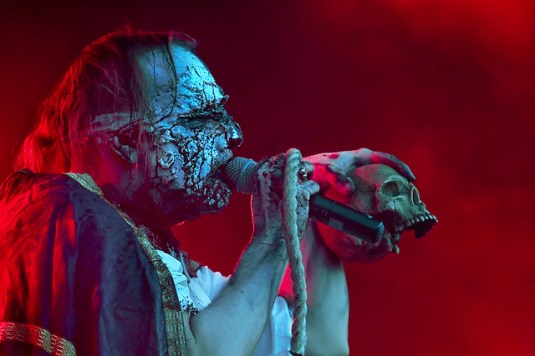
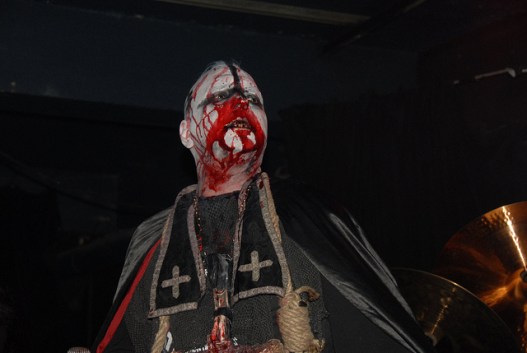
The man himself doesn’t need an introduction nor does his persona. I choose to focus on his despotic fascination for homemade costumes and “clothing” that he chooses to adorn himself with on stage for Mayhem, Void Ov Voices and Sunn O))). At one gig going as far to make himself up as a tree, explaining that Sunn O))) music was for the plants. Some of his appearances have nonetheless been deemed controversial or lame, but opinions are irrelevant because it is not made with the intentions to impress. Some of his masks were designed by Nader Sadek, who I also plan to write about. Various others designs that have come across were the German Hitler outfit, broken mirror man, the death priest (over 70 years old and made by nuns) and the mummy…
Atilla states about the purpose of the visual aesthetics “I like to challenge the audience, so the worst thing for me is going on stage with something that has been seen a million times before, like corpse paint. Actually, the first time I wore corpse paint was in 1987 with my band Tormentor. Alien Sex Fiend were using white make-up, so I started to wear a white base and put black make-up on top, around the eyes and the mouth. It was cool then”
Read about his other thoughts and check out all the costumes below:
And future ideas “I want to make something that would make me look like I was performing in another dimension. I wanted to levitate in a huge, on-stage aquarium filled with liquid, wearing deep-diving gear. We planned to have strange or weird sea animals swimming around, like ink fishes, octopuses and horseshoe crabs, for instance. I wanted a spacesuit but they are extremely expensive. Huge crystals could be good too for appearing as a fossil”





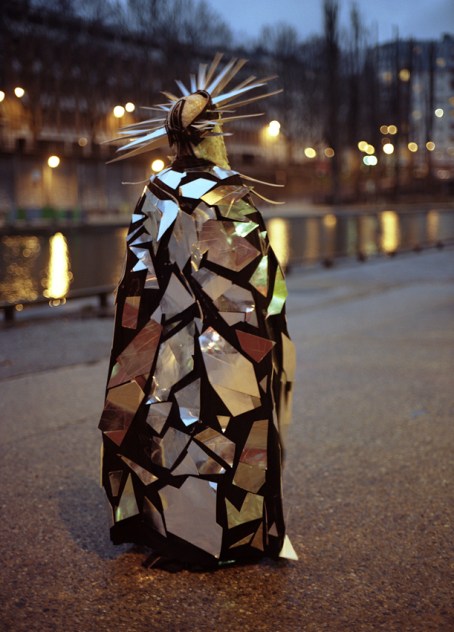
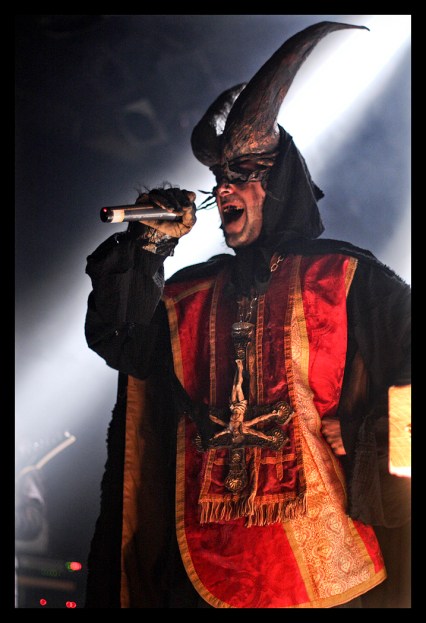

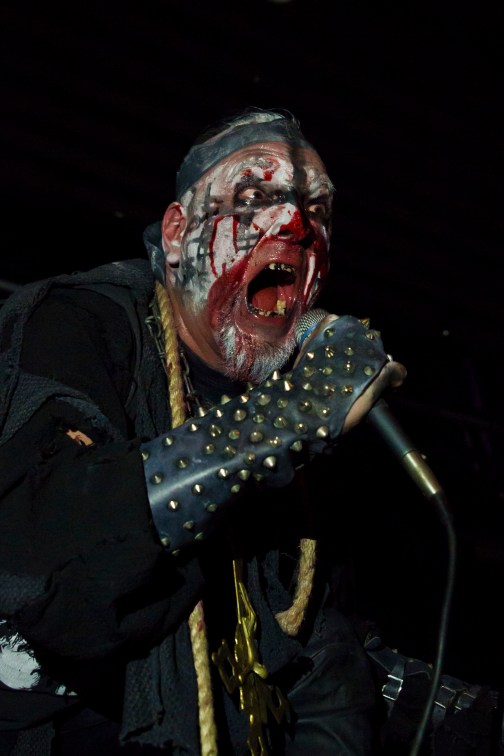

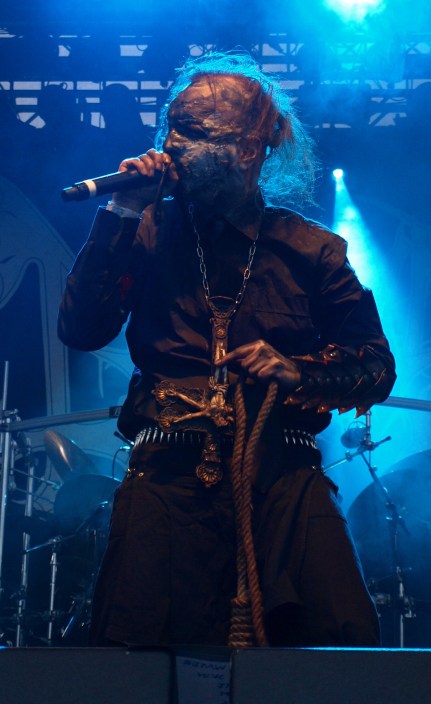
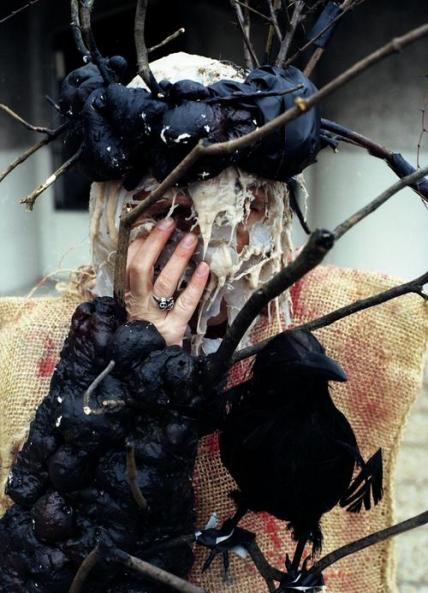

(About the Author: A domesticated primate philosopher on an oxygen-supported carbon based planet circling a Type G star. Also a polymath of the arts and sciences, and animal at heart. I love attending concerts, black metal culture, drawing, reading, meeting like minded persons, runic lore, writing, bdsm, walks through nature, sampling her finest herbs and doing primal fitness. I am an activist and animist so my recent writings will take more focus on these, as well as other outside culture. Sometime in the near future i will move to UK and then Norway, My other journals include: http://aferalspirit.wordpress.com/ http://atmanentelechy.wordpress.com/ http://journeyoftheseer.tumblr.com/)
(Source: http://www.cvltnation.com/anti-fashion-ov-atilla-csihar-2/)
NAEVUS – Backsaddling 7″EP (Out Now!)
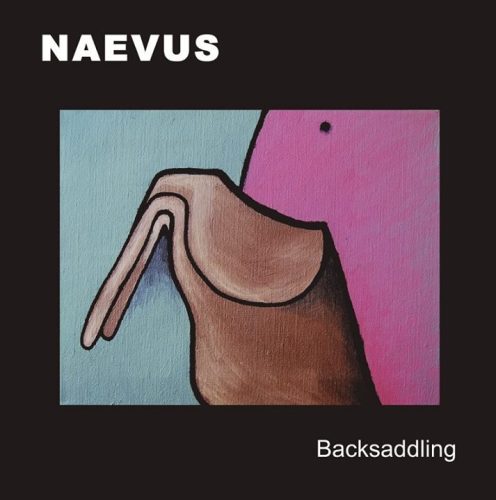
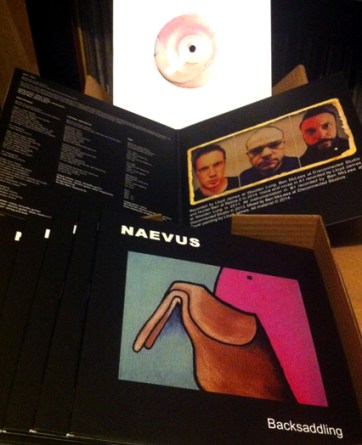
NAEVUS – Backsaddling 7″EP (4iB009)
Side A
1. Up a Hill
2. Aria/Acqua
Side B
1. Listing Instincts
2. Ego
Details:
– 7″ in Gatefold Cardboard Sleeve
– Limited Edition 200 Copies
– Individually Numbered (Vinyl, Sleeve and Cover Sticker)
PRICE (Incl. Airmail Shipping from Singapore): USD22.49 / €18 / £14
To Purchase, Please Click Here:
Naevus has often been closely associated with the neofolk/darkfolk genre, but this 7″ release attests much more to that perception by demonstrating the versatility and diverse influence of the band. In this current lineup comprising Lloyd James, Ben McLees and Hunter Barr, the 4 tracks in Backsaddling draw from a wide variety of musical influences ranging from industrial; as a narrative intro that revisits a passage in time in ‘Up A Hill’, intermixed with frontman Lloyd James’s neofolk vocal style with further accompaniment of acoustic elements in ‘Listing Instincts’, and finally infused with electronics and progressive post punk melodies of infectious guitar twangs and bass riffs in ‘Aria/Acqua’ & ‘Ego’.
The tracks are well written and harmoniously arranged that they defy a static genre definition. This can be attributed to Lloyd James’s extensive exposure to acts from across all genres and styles by being an active contributor in the music circle. Other than performing as a solo acoustic artist, Lloyd has been a prolific participant in many other experimental, post industrial, post punk and neofolk bands as a guest vocalist, percussionist and guitarist. Some of them include Knifeladder, Kirlian Camera, Sol Invictus, Sorrow/Rose McDowall, Sieben, Albin Julius & Friends, Andrew King, While Angels Watch, Fire + Ice, Mushroom’s Patience and more. Hence, be expected to discover the remnants of these acts being reinvented, rehashed and re-presented in a unique combination of genres in a style that is uniquely Naevus.
=======================================================
Please direct all enquiries to:
4iB Records
PO Box 206
Singapore 914007
email: gerald@4ibrecords.com
www.4ibrecords.com
> Enter The Furnace: SCOTT Walker Interviewed (A Quietus Interview By John Doran)
John Doran meets the inimitable 30th Century Man to discuss Soused, his collaboration with Sunn O))) and front runner for album of the year

“When Richard Strauss conducted his opera Salome on May 16, 1906, in the Austrian city of Graz, several crowned heads of European music gathered to witness the event. The premiere of Salome had taken place in Dresden five months earlier, and word had got out that Strauss had created something beyond the pale – an ultra-dissonant biblical spectacle, based on a play by an Irish degenerate whose name was not mentioned in polite company, a work so frightful in its depiction of adolescent lust that imperial censors had banned it from the Court Opera in Vienna.” – Alex Ross from The Rest Is Noise
If people had been outraged by Oscar Wilde’s play Salomé with its implicit references to necrophilia and incest; as the basis of his “ultra-dissonant” opera, Strauss leant on and amplified these themes to help create a massive succès de scandale that simultaneously shocked, delighted and disgusted contemporary Austrian society. But it was a success that doubtlessly overshadowed his musical innovation.
Over a century later, the second track on Scott Walker and Sunn O)))’s outstanding album Soused – ‘Herod 2014’ – revisits The Bible to retell an even more disturbing story: that of the King of Judea (Salome’s grandfather) and his campaign of mass infanticide. As moving and as brilliant as this track is – and it is moving and brilliant – it demonstrates how the potential of art to create controversial shock and awe has all but vanished. How could a listener be dismayed by this ancient tale of terrible violence done in the Middle East – or the sonic shroud it is presented in – when just a click away on YouTube there is footage of aid workers and journalists being beheaded in Syria and families being decimated in the Gaza Strip for all to see.
Art’s ability to scandalise can no longer keep pace with modern information media’s unflinching gaze on the genuine brutality of 21st Century life (this theme is explored in more depth in an excellent essay on Soused by Dan Franklin which will be published on tQ next week). This of course should be viewed as a Good Thing as it has actually freed the modern artist from 20th Century shackles, rather than made their job harder. (If only once powerfully influential celebrities such as Morrissey and Damien Hirst could understand that they have been liberated from the need to be controversial; if only they could realise that the insistence on sticking with old modes of behaviour simply makes them look repugnant, conservative and out of date rather than subversive.)
In his hugely influential 1936 essay The Work Of Art In The Age Of Mechanical Reproduction (Or Reproducibility) Walter Benjamin said that the ubiquity of art caused by modern technology had liberated it from subservience to ritual and allowed it to assume a political role. Now that art has been liberated (essentially and for the most part) from the need and the ability to outrage, it is now also genuinely free to be judged more on aesthetic, artistic and political criteria rather than merely by the column inches it has the potential to generate. As time progresses, those who pursue controversy purely for the sake of promotion will only look more and more out of touch. Those that haven’t been exposed already will reveal themselves to be charlatans.
This is not to say that Soused doesn’t shock in other ways. It really does. There is the initial rush… the initial blast of hearing it loud… Holy shit! It’s Scott Walker and Sunn O))) – it’s actually real and not just some torrid dream I had! But the transition from an initially violent state of novelty to one of deep appreciation is smooth and luxurious. Yeah, Soused is a mind blowing first listen but it’s the keeper of all keepers as well. The aesthetic, the (spiritual and philosophical) weight of the music and the outlier nature of the work that both Scott Walker and Sunn O))) produce are both weirdly complimentary and very similar by turns even though in strict musical terms they could barely be more different from one another. And this is followed by the thrilling aftershock of counter intuition – the realisation that this bizarre, dreamlike combination of heavyweight musical talents has resulted in probably the most accessible thing that Scott Walker has produced since his tracks on Nite Flights (and it is certainly Sunn O)))’s most accessible album full stop).
The title is apt, with its reference to ritual submersion in liquid, drunkenness and pickling not to mention its status as an archaic term for assault. The term ‘soused’ of course reflects Sunn O)))’s atmosphere disrupting drone metal, which is as impactful as always, its effectiveness not blunted for being used sparingly in relative terms. (Stephen O’Malley told me a few weeks ago that when they arrived at Westpoint, they brought with them so much amplification that they couldn’t fit it all into the studio. But they fitted enough inside for the job and he described the session as feeling like it was “cracking the physical space wide open with electrical energy”.) Scott Walker and Peter Walsh’s stately production job has perhaps burnished the colossal drones but not hampered their efficacy.
Of course it’s hard to judge after such a short amount of time but the words to these tracks feel like the best lyrics that Walker has produced. Sure, they lack some of the labyrinthine/T.S. Eliot setting a cryptic crossword ferocity of those on Bisch Bosch but fundamentally they’re more enjoyable to listen to and revel in. A comparable switch would be reading The Wasteland and then The Love Song Of J Alfred Prufrock. Take ‘Herod 2014’ for example, which is ostensibly about a mother hiding her firstborn from the king’s terrible edict:
“She’s hidden her babies away
“Their soft gummy smiles
won’t be gilding the menu.
“The deer fly, the sand fly
the tsetse can’t find them.
“The goon from the Stasi
is left far behind them.
She’s hidden her babies away.
The potential to further explore Herod’s slaughter of the first born is ignored, thankfully, in favour of a different kind of horror, one that is hard won and slow to reveal itself. And one that is explored with an efflorescence of vivid imagery:
“She’s hidden her babies away
“And why bring them out
with no shelter on offer.
“The nurseries and creches
are heaving with lush lice.
“Bubonic, blue-blankets,
run ragged with church mice.
“The Havana has died
in the clam-shell ashtray.
“She’s hidden her babies away.”
And by the time we get to the ‘punchline’ – his vision is revealed as a retreat away from reality. A retreat away from sanity. A retreat away from existence itself. This horror is pure shock not schlock and Lovecraftian in its intensity:
“A R-e-a-c-h-i-n-g L-o-n-g A-r-m-e-d
vet ape
feeling hard
for a breech birth.
“I gaze up at the night,
at the asterisk’s blazing,
“till they straighten,
and like tiny spines,
fall to earth.
“I bite down on this,
as I dance
and I pray.
“She’s hidden her babies away.”
That Soused exists is, on its own, cause for celebration. That it exists and is brilliant is cause, in my opinion, for the declaration of a new national holiday.

I met up with Scott Walker last week at his managers’ West London home.
First of all I wanted to congratulate you on your poker face because when I was sat in this very same chair in December 2012, interviewing you about Bish Bosch I was actually wearing a Sunn O))) T shirt and I asked you some questions about drone metal and black metal. You said you were aware of these genres and discussed them briefly with me but of course behind the scenes you’d been talking to Stephen O’Malley and Greg Anderson of Sunn O))) for a couple of years by that point.
Scott Walker: I’d been talking to them but not literally. We’d been sending messages back and forth. I was thinking about the project then, yeah.
When did Sunn O))) first get in touch with you?
SW: In 2009. It was for Monoliths + Dimensions but I couldn’t do it – not because I didn’t want to but because I wasn’t available, I was working on something else at the time. They wanted something written and sung and I just didn’t have the time. So that was the first time.
Did they send you a scratch demo of the track ‘Alice’?
SW: They did. I don’t remember what the track was called but yes they did. They asked me if I could write something for it and sing it.
Had you heard the band before?
SW: No.
Did you explore what the group sounded like?
SW: They sent me all of their CDs and I listened to nearly all of them – simply because I really liked them. And that’s when I became aware of them.
There’s a slogan that’s printed on a lot of their records which reads: “Maximum Volume Yields Maximum Results”. Did you acquiesce to their dictat and did you give them a good rinse?
SW: Yes. We’re all volume freaks. Even before this record we have always recorded guitars at a very high volume in the studio but of course it was never anything like Soused. We even mix very loud, which is very unfashionable.
After you couldn’t work with them on Monoliths + Dimensions when did the first germ of the idea for Soused happen?
SW: I think the last time we spoke, I told you what a trial it was making the last record not because of being in the studio but because of the gaps between everything. And it literally drove Pete [Walsh, musical director] and I insane… I was thinking that I would love to make a record faster and with continuity and reduce everything. Get rid of the cast of thousands and take it down to the basics. And the basic in music is the drone. So I thought, ‘Well, it’s a reductive exercise.’ And then I thought of those guys and the drones. So I sent them an email via the record company and said, ‘Look if I’m going to do this are you interested… if I write these songs do you want to be part of it?’ They said yes they were so I said, ‘Well, I’ll get on with it then.’
Whether it’s avant garde or extreme or mainstream heavy metal – is this a genre that you’ve not really paid that much attention to in the past or is it something you’ve been moderately aware of?
SW: Moderately aware of. Yeah. And I’ve always liked it. And I’ve always thought, ‘My sound could work with this.’ And so it was really a case of who to pick to work with.
And I don’t want to state the obvious but it feels to me like what Sunn O))) do and what you have done over the last four albums might not be in the same genre and might not sound formally alike but aesthetically, philosophically and spiritually they have a lot in common don’t they?
SW: Yeah. It’s the weight of it. Because it’s not like working with a band which would be boring to me when it’s just like four or five guys playing. I either wanted to do something very big or very small. If you look at the last track on my last few albums it’s just me and it’s quite small or otherwise it’s a cast of thousands. They were a great compromise in that way because of the weight they have. I mean they’re so loud. When we recorded them [laughs] it was shockingly loud. We’d go into the studio and… ha ha ha! We all had to wear earplugs. The first day we heard it – that brought new meaning to the phrase ‘guitar levels’.
I believe that when Sunn O))) turned up to Wespoint in London, they brought so much amplification that they couldn’t fit all of it into the studio, which is almost worthy of a Spinal Tap storyline.
SW: I know. It was ridiculous. But thankfully enough of it fitted in. It was just perfect for what I wanted to do.
Was Peter Walsh at the receiving end of the guitar onslaught?
SW: [nodding] Because he’s miking things up. Yeah. [laughs] So he started wearing earplugs pretty quickly and so did Mark [Warman, Musical Director]. And then everyone started wearing earplugs. But you can feel it right up through your knees, it’s such a weird thing. And funnily enough when I was standing right in the centre of it, it didn’t bother me but when you first go into the room it’s like entering a furnace… a furnace of sound.
Did you find it interesting that they obviously had a pedigree for working with very distinctive vocalists such as Attila Csihar of Mayhem and Julian Cope?
SW: I thought their sound would be complimentary to my voice but whichever vocalists they had working with them before I had really no interest in that, that didn’t influence me at all. I was just thinking what I could do with them and what I could bring to the project. So that wasn’t a consideration.
Stephen O’Malley told me that he was blown away by the scratch demos that you sent to him and Greg; that they revealed that you completely understood how their music worked. To what extent did you have to shift your own compositional sense or perspective around in order to incorporate their noise – because, let’s face it, they do create a very intrusive noise.
SW: Well, it’s all about where you place everything – that’s the most important thing. Where you place the vocal with the guitars and any other noises you use. But in a sense because it was reductive I wasn’t having to worry about, or to be concerned with, harmony so much. I could get a really primal noise which is what I was really after anyway. So in one sense it was harder because I had to be aware that I needed more space but in another sense it was also easier.
So normally you work with different, talented musicians and even though they’re in demand and some of them are famous in their own right, they are very much your band. Did it change anything working with an outside unit who were already a band in their own right and in possession of a very long recording history of their own?
SW: Let me say that it was an absolute pleasure, the whole thing. It was really… I’d never met them before, we’d never spoken, we just turned up at the studio. I thought it was the best way to do it. So I thought, ‘If it’s going to be an ugly surprise, it’s going to be an ugly surprise and everyone can just go away and try and forget about it.’ But I like that. I like the risk factor involved in something like this because I didn’t know what was going to happen. But they were an absolute pleasure and everyone got on perfectly. They were serious about what they did but they were funny as well. They were so aware of their sound and how it evolves. And very particular about their sound.
So Sunn O))) weren’t there for the whole album were they? It was recorded in a couple of different stages.
SW: Yeah it was. They were with us for a week. And then they went and we carried on but we had continuity to it which is what we wanted.

How quick was it compared to Bish Bosch?
SW: Because we didn’t have to wait for big studios for strings and other studios for other things it was much quicker. We used a big studio for a couple of things: the drums and the whips. We got my friend Pete The Whipper down from Bristol to record the whips. Peter Gamble is the bullwhip champion of Great Britain. He came down on the train with nine bullwhips and we recorded all of them at the big studio. Some of them are about three metres long. He had them from Australia, from America. We settled on the American whip – the real bullwhip. He was amazing. He could crack two at the same time. We have a video of him. He throws axes as well. And do you know what his day job is? Health and safety. [laughs] That cracks me up. We had Sunn O))) for a week and we worked so well and so concentratedly that we had nearly a day left over in studio time. So we were really cooking.
The songs on Soused are very different to those on Bish Bosch, they’re a lot less complex in compositional terms. They’re more song-like songs. Was this due to having to work with this very powerful, primal Sunn O))) sound or was it just something you were aiming for?
SW: No, I started writing and it just kind of unfolded that way – in this kind of slightly more traditional way. Actually, I don’t think ‘Fetish’ fits that mould but I know what you’re saying. It was just as I was arranging them, that’s how they came. And my main thing was I had to leave space for the drones to happen, so there had to be plenty of room for them to unfold, work and happen. I couldn’t squeeze things together like in a traditional song.
So, can you tell me about ‘Brando’. The lyrics suggest that it’s named after the actor.
SW: Yes. I’ll talk a little bit about some of the songs but as you know I don’t want to go too far down that road because once you become too detailed about a song it ruins whatever it is that it has. But I can tell you a few things… I was watching One Eyed Jacks on television one night. And I know all of his films really well and I like them. But I thought to myself, ‘Hey, he must have it written into his contract that he has to get beaten up in the films he’s in.’ In One-Eyed Jacks he gets tied to a post and beaten by Karl Malden with a bullwhip. In The Chase he gets beaten to a pulp by the local town vigilantes. In Reflections In A Golden Eye, he gets repeatedly beaten across the face with a riding crop by Elizabeth Taylor. There’s On The Waterfront of course… In The Appaloosa as well. In The Wild One he gets beaten up by vigilantes. He must have had it written into his contract.
There’s an undeniably sado-masochistic, sexual element to this…
SW: Yeah. It’s a song of unfulfilled longing. A song of masochistic longing.
When I first heard the album I naturally presumed that Sunn O))) had just done the drones but Stephen told me that they’d actually done all of the guitar parts.
SW: They did all the guitar stuff.
This is the most formally varied album that Sunn O))) have done, in the terms of the guitars, so was there a discussion about getting them to use different styles?
SW: The original email I sent said, ‘If you guys just want to concentrate on the drones I’ll get one of my guys to do all the lead stuff.’ But they got back to me and said, ‘We’d like to have a go at all of it.’ They did. Tos [Nieuwenhuizen, auxiliary member of Sunn O)))] was great. He played quite a lot of [the lead guitar]. He has a natural feel for the lead guitar. He has a wonderful groove feel and everything he does sits right in the pocket. I didn’t know who he was when he turned up though. I thought, ‘Who is this guy? Is he their tech?’ But they were like, ‘No he plays [in Sunn O)))] as well.’ And he was really great.
There are all sorts of guitar styles on there aren’t there? There are some real classic rock flourishes on ‘Brando’, the kind that almost wouldn’t be out of place on a Guns N’Roses track but then these are counterbalanced by the dreadful rumble, the heavy drone industrial bass lines and some no wave, atonal chords as well.
SW: If it gets too Guns N’Roses you want to stop that though, and replace it with something else! [laughs]
Can you outline Peter Walsh’s role in the recording and tell me if it varied much from his role on previous recordings?
SW: His role wasn’t really that different to how it has been in the past. I just rely on him to get the best recording we can get. Where he was really great was in the mixing stage because he has so much on his hands and I’m always in and out trying to get everything shaped. But he’s always there with suggestions. But in the mixing stage he was brilliant on this record. This record was such a contrast to the last one and this time everything went right. It almost painted itself. Everything we tried worked. I tried to sabotage it at one point but I couldn’t do it. I would come up with an idea but had to say, ‘That sounds great!’ It didn’t matter what I threw at it. I kept on trying to knock it off course but everything we did worked.
What were the responses from everyone on your team when they were first placed in this crucible of drone metal?
SW: Well Mark was shocked but then he always is because he’s from the world of musical theatre. [laughs] When we did The Drift with him he’d come straight from doing a musical. He was a replacement for a guy that we had before and he walked into this situation with all the meat punching and all of that and for him it was like walking into a nightmare. But then he settled in and he’s been brilliant ever since. And whatever we do now – like I said last time, even if we drive cattle through the studio – he’ll cope. He’ll pick it up.
Did you go through a number of choices before you settled on Soused as the title?
SW: I had two potential names and I sent them off to Stephen because he designed the cover and all that. I sent through “Ronronner” which is the French word for purr. You know, like the noise a big cat would make but he said that French would read that as too cute. So I came up with Soused.
I don’t think Stephen and Greg will mind me saying that they like a drink or two but what about you? Aren’t you teetotal?
SW: Oh no! Not at all. I don’t drink as much as I used to. I’m more of a weekend drinker now. The name has a few meanings but the one meaning being submersed in water, that’s the one we were after.
This might sound like a strange question but did Sunn O))) push you outside of your comfort zone. I say strange because someone listening to your last few records might be forgiven for presuming that you don’t have a comfort zone.
SW: Yeah, I push myself out of my comfort zone. [laughs] Well, yes, but only in the sense that they sound different so I had to make what I do work with that and that’s always a challenge. But once we started doing it, it was great.
What aspect of this project did you get the most intrinsic pleasure out of?
SW: Experiencing them first when I first heard them in the studio. It was like… [whistles] I thought, ‘This is either going to work or it’s going to be fucking awful. And mixing it was great as well.
Is it inevitable that people are going to draw a comparison between the recent occurrences in the Middle East, with the beheadings by ISIS and the song ‘Herod 2014’?
SW: It might be inevitable but I wrote it before these things started happening. Whatever associations people have after listening to this song, that’s fine. I’m happy for people to bring whatever they want to the work but I didn’t have that in my mind.
I was thinking earlier today about how shocking ‘Herod 2014’ compared to the opera Richard Strauss produced based on the Oscar Wilde version of Salomé with all of its suggestions of necrophilia and incest. Is it pretty much impossible for an artist to shock their audience in terms of subject matter these days and is it even your job to shock your audience any more?
SW: That used to be the case. It was definitely in people’s heads to try and shock especially in the modernist period. I just work in my own sound world now though. I’ve established a sound world and developed certain tropes and things that I understand now. The track starts with a bell, which is really a representation of the female in the song. But the bell is submerged in the song, you can barely hear it but it’s keeping a pulse and hiding away in the track and you only hear it appear at the very end again. There is a noise at the beginning, a kind of wah wah wah noise – that’s taken from a recording that gets played to babies in the womb. It’s a white noise sound that’s meant to keep them tranquil. It’s meant to keep them really tranquil but the fucking thing is really loud, I don’t know how it works! It’s a scary noise and there are things like that placed here and there in the track.
I think the lyrics to this album work as poetry. And maybe you could say that about the lyrics to Bish Bosch but that would be a different kind of verse – more fractured, modernist, hyper-condensed and full of allusion whereas the lyrics to Soused I think you could take intrinsic pleasure from the luxurious use of language and how the words have been juxtaposed. It simply has a more intrinsic lyrical quality to my ears. Did these lyrics come easier to you?
SW: Some of them did. On Bish Bosch there’s not so much rhyming so you have to make everything count in itself. So when you’re rhyming it makes everything easier. On a song like ‘Herod 2014’ a lot of it rhymes so it’s fun to write because the combinations of words are fun to work out. But it’s hard as well. I didn’t do this with all the songs though and on ‘Fetish’ I go off on a Bish Bosch tangent. I go off into a scheme with no rhyming. It all takes time but this was faster than I thought it was going to be.
Is it more fun for you to write in this way that it is to write for Bish Bosch?
SW: Yes because I’m dealing with fewer forces simultaneously. On Bish Bosch I was constantly having to match the lyrics to other forces. I was constantly having to think, ‘What am I going to do with the strings here that hasn’t been done before to make the phrase really kick – to make these words really stand out? What’s the noise for this lyric?’ And I had a long list of things that needed to be dealt with. Here I could get freer with the lyric writing.
Soused is unusually melodic for both you and Sunn O))) – does this mark a movement away from the more atonal style of Bish Bosch or is it more of a ring-fenced project?
SW: People are funny about saying side-project now aren’t they? Everyone has come to hate that term. But that is how Soused actually started. I think the idea of it being more melodic is the actual surprise of it. When people read that we were going to do this record I think what they expected was a lot of drones and some incoherent shit… you know what I mean… some screaming buried in the background. But I think the great surprise of it is that it is as it is now. And that’s what makes it more far out.
Can you tell me about the use of Latin on the track ‘Bull’ – you’ve got the term “Custodient migremus” – which means “keep moving on” and you’ve also got several terms which roughly translate as the occurrence of pain… restless pain… sinful pain… why is this?
SW: The idea of the song is it’s a crusade. There are a lot of crusade images in it. It’s a crusade against existence itself. I was trying to go back to the crusades so I started going back to Latin for that reason itself. My Latin pronunciation is terrible but Pete’s son, who is about nine or ten, speaks perfect Latin. So we phoned him up in Germany and asked him to pronounce all the words down the phone for me. You can hear his little voice right at the beginning of the track from where we recorded the phone conversation.
Will Soused influence what you do next? Even though everything you’ve done for the last few decades has been markedly distinct from each other, there is also a through line and one record seems to influence the next.
SW: I don’t know because I haven’t started thinking about it yet. I’ve had a kind of strange year because I’ve got several projects but none of them have quite panned out yet. They’re in the mix but nothing to do with recording another record. So I’m kind of in that space at the moment.
Now I wasn’t going to ask this originally but there was a clue on the official 4AD website which made me change my mind. On the Soused website there are tabs which read ‘news’, ‘video’ and ‘live’. So are there going to be live shows?
SW: I haven’t seen what you’re looking about but then I never look at the website so that could be why… Erm… Stephen and I brushed on this and we all want to see what’s going to happen with the album.
But you’re not saying no.
SW: We’re not saying no but we want to see what the reaction will be, to see if it’s strong enough to make a consideration of it.
But if the reaction is strong enough then you’ll be looking for a venue that’s nice enough and well equipped enough to reproduce this kind of sound?
SW: Yeah. Oh yeah… Oh yeah.
Can you tell me about ‘Fetish’, the least standard track on the album?
SW: It’s about fetishising objects… but it’s one of the songs I kind of want to skate around really because I like to have people work that out for themselves.
Ok, well, Scott-watchers will already know the last track on the album ‘Lullaby’ as a version of ‘Lullaby (by by by)’ which you wrote for Ute Lemper in the late 1990s and which appeared as a bonus track to the Japanese version of her LP Punishing Kiss.
SW: That’s right. I wrote it in 1999.
Ok, well, her version of this song is already fantastic. Why revisit it?
SW: It’s because the song is one of the only songs… in a sense, in a very superficial sense, the song is about assisted suicide. That was in the air back then but now it’s really in the air. So I thought, ‘We could do a great version of this song. I’ll just rearrange it for us.’ So I chopped away at it and changed it. And it worked. Like everyone I know, I am torn about this subject. I understand the problem and why some people want it but I’m very frightened about the idea of people engineering our deaths in a technological way. That’s the bothering thing about it to me. So that’s why I recorded it because it’s a current issue but then again it’s also one of those timeless subjects. It’s absolutely brutal, especially in the “Lullaby lullaby” section where I’m absolutely screaming it so there’s no vocal quality at all in it. It’s not a quiet lullaby it’s an absurd lullaby because I’m shouting it.*
Do you find it in anyway upsetting or draining to sing this track?
SW: Erm… it was in some ways but when I have that great track that Sunn O))) did… I did it in one take and I just love what we did with it. That was one of the tracks where Greg was coming back in while I was trying to get it right and he would say, ‘Oh God, that sounds like shit.’ And then I found a way with them to make it sit but then it worked. I guess that was the only one where we had a bit of a glitch.
What are some of the instances of on the fly studio innovation that you used?
SW: Oh, there are so many examples… There’s that middle section in ‘Fetish’ where the guitars go [hums Suicide-like riff] and I wasn’t liking that. So finally I was on the floor with the ring modulators and everything else because it wasn’t funny enough. It wasn’t darkly funny enough. And then it worked and then Greg went crazy and shouted, ‘You nailed it man!’ It’s interesting working with Americans because I never usually work with them. Not for nearly 50 years. He’s a funny guy though. So polite.
You’ll have to watch it if you do play live with them in case they make you put on the robes…
SW: [laughs] That is definitely OUT!
When was the last time you wrote lyrics autobiographically?
SW: Oh God… the 60s probably.
You always say, ‘I’m not going to leave it so long until the next record.’ And then, to be fair to you, last time after Bish Bosch you really didn’t leave it that long. I know you’ve said that things aren’t coming together for a new record just yet but what do you have in the pipeline that you can talk about?
SW: I’m doing a film soundtrack. I’m going to start one. But the thing is there are contractual issues going on. Not to do with me but to do with other people involved with the movie. So it’s been on and off and on and off. But it should start sometime this year.
Presumably you won’t want it to last as long as Pola X did.
SW: Oh God no. No. But listen, the contract stage of the film already has lasted longer than Pola X.
Well, I just wanted to say that I’ve really enjoyed hearing the album. It was an amazing idea and even better in practice.
SW: Thank you.
[*A few hours after the interview, Scott’s manager forwarded me the following email:
Hey John
Just a small detail that I forgot to mention regarding LULLABY that might be of help. The reason for quoting some of the William Byrd song “My Sweet little Darling” is because the English language is considered to be the technological language.
Good Luck.
Scott.]
(Source: http://thequietus.com/articles/16411-scott-walker-interview-sunn-o-soused)
> GRUNT

Grunt was formed in Finland during spring 1993 to create hard audio havoc. Its early incarnations operated with few other names, before settling into Grunt and making the first officially published works. After 20 years of activity, it is still going strong. Various styles of noise electronics are always hammered with such pressure it usually transforms into known Grunt-noise, even if new methods and approaches are added. Various interests, moods and approaches and different kinds of topics has been used during the years. Strong visuals and lyrics are the most well known to people.
Since early days, Grunt has been merely part of international power electronics-noise scene. There has never been desire to attract attention widely. There has never been attempts to be credible within academic noise circles, performance art or modern industrial culture. Nor promote it in media outside the core of noise-underground. However, neither there is clear desire to follow genre restrictions. When invitations have happened, Grunt has been featured in documentaries, newspaper articles, playing together with punk, metal and gothic bands as well as among performance art events.
Grunt is tightly connected to the vision of Freak Animal Records label and has also handful of other forms, what can be understood as projects of their own or simply branches slightly separated from the main project.
1993
Early years of Grunt was trying different kinds of directions. Earliest recordings was created by merely tuning down guitar strings until they were hanging loose over the guitar microphones and making rumbling noises. Lack of any kind of effects or even amplifiers made noise the most simple and primitive wall of rumbles. Early on, it was created by borrowed equipment. Lacking possibilities to experiment and test due short periods of time equipment was available. Third release, “Industrial Madness?” (Autumn 1993), various metal objects were included in making tracks. Often rhythmic industrial noise with low tuned string abuse, radio-noise, vocals, metal junk noises. Still some musical elements were tried, influenced by industrial bands like Godflesh or Einstürzende Neubauten. Half of the material remains unbearably clumsy, yet traits of what is about to come could be heard.
Early on, I had very little knowledge of noise as “scene” or “phenomena”. Early days of Grunt were influenced by the bigger names, such as mentioned Godflesh, Einstürzende Neubauten, live video footage of Swans, and Finnish punk-scene originating noise mongers who had just published their debut works in 1991/1992: Bizarre Uproar and Unseen Noise Death.
1994
Various recordings approaching the sound from a “band” perspective was made at the same time while experimenting also as solo. There exist recordings which were clumsy industrial percussion with guitars and bass playing with clear instrument sound. There was also more noisecore influenced materials, which both were bound to be left aside. In this period of not even fully knowing what exactly should be done, there was no idea who could be interested to even hear these releases. If anyone. These early tapes existed pretty much less than 30 copies made. Strong recollections of shattering this utter outsider feeling still remains in my brain. When writing to publisher of Icy Illusions compilation tape series (Czech Republic) that I would like to publish Grunt 7”, but I doubt there exists people who want noise records, he briefly explained reality is very different. I received letter explaining that in Japan there is actually labels who have put out CDs and even up to 50 titles. This information simply blew my mind and from this moment of receiving addresses of Alchemy Records, GROSS, Endorphine Factory and RRRecords (USA), I knew when next tape is done, I will write everybody and find out all what I can. Until now, I had considered every noise band be utmost anomaly and isolated case.
With the growing serious intentions, later in 1994, new era of sound was introduced. When getting first own multi-track recorder, things started to progress. Simplest possible 4-track tape recorder, with no EQs, no aux, only two lines in. Volume and panning knobs for each channel being only “post production” possibilities. With addition of one cheap plastic microphone and 12W Marshall rehearsal amp, with nothing but enthusiasm and time, things started to take better direction. More experience in making connections with the few devices available resulted creating interesting results, most of all with internal feedback.
Putting situation in context: this was a underage teenage boy living in small town near Russian border, with no information how other people did their works and at this point merely access to few international artists such as Man Is The Bastard and Gerogerigegege. I was utterly clueless about effects as well as didn’t know of existence of devices such as “analogue synthesizer”. I had never seen one and never thought how such sounds are created! Only by accident, I learned that if plugging my cheap package-stereo system in loop with 4-track (4-track output to stereo-in, and stereo headphones to 4-track input) and turning channel panning to left and adjusting graphic equalizer, I could create the sounds I liked.
Sound took direction closer to old power electronics, even if that was hardly conscious intention. Many of the recordings were buzz of electronics and feedback, radio-noise and some with vocals.
“One Animal Above The Others” tape was result of this new direction, and it was mailed to labels I had heard of. As result RRRecords and G.R.O.S.S. replied and while latter was at the time way too expensive to purchase items, RRRecords and especially its recently lauched Pure CD series were instant mindblowing influence. Extensive tape trading offered possibility to quickly educate myself with vast history of genre and in matter of months, situation had moved from being clueless outsider into not only being hungry student of past, but also starting to get in touch with other noise makers – small and bigger.
Still all early recordings came out as cassette tape releases, being distributed in small editions between 15 and 150 copies, most being closer to 50. Many of them went through trading to various small noise artists as well as people from other scenes, who many disappeared from the scene, resulting that hardly anyone currently involved in international noise scene has ever heard the early recordings. In 2012 Industrial Recollections launched project to digitalize all ’90s tape material into CD format which allows whole decade worth of obscurities be heard – often for the first time!
1995-1996
Early 1995 until summer was some of the most productive times of Grunt. Recordings during these times took place, if not daily, then at least weekly basis. 1995 was the time when Grunt slowly started to make more and more connections among the international noise community, with putting out recordings on other people’s labels and getting distributed by well known distributors of the time. It remained relatively low profile still for the upcoming years. Even if being involved with international scene, there was never intention to focus any particular side a la “harsh noise” or “power electronics” scenes, but remain somewhere between, where all the noisy sounds melt together into bizarre mix.
First live show was played in 1995. There was prepared metal object to be amplified and drum machine to create electronic effects, yet utter failures in technical know-how, and last minute changes on stage, led to doing it with traditional instruments and session members: guitar feedback, vocals, drums. Not very successful result caused long break until next attempt to perform live.
Getting introduced to first effect pedals in Summer ‘95, changed approach to the sound. While all 1995 was created with borrowed effects (of Temple Of Tiermes), in winter 1996 I would finally gather enough money to buy large guitar multieffect.
Possibities of multieffect were drastic, and use of heavy delay effect on screaming vocals and abundance of echoing metal junk and droning feedback became traditional Grunt elements what continued for years. To the point of ultimate overdose, one could say. The main influences of the time were taken from Masonna, Gerogerigegege and Ramleh.
In very first releases, my intention was to mix “political” or “social” themes among the music, but for period of time, perhaps by strong influence of Japanese noise, I intentionally rejected “message”. Focus was purely on sound and vocals were aimed to be sonic effect, just like in Masonna, Hijokaidan or Gerogerigegege. I remember writing with contacts abroad, discussing about never-ending topics such importance of content vs. pure sonic content as well as which is more inspiring, the sheer energy of Japanese noise or dark and strong subject matter of power electronics/industrial noise. It seems weird now, that even in some (lost?) ‘zine interview I recall explaining how I try to reject cliches such as porn or violence, because they are done already. While such content actually is the best known side of Grunt’s later works! While releases from ‘93-‘95 dealt with state, religion, death, pollution, waste, junk, military, etc. ‘95-‘97 was slowly bleeding into absurdity some vague weirdness.
1997-2000
From 1997 you can see another clearly new milestone of Grunt. From experimenting simply by terms of what effect results what kind of sound and how to layer things to make it interesting, it felt necessary to move into better constructed recordings. There came need to focus more into planned and composed recordings. All these intentions and approaches bleed over each other in chronology, but 1997 marks the time when Grunt returned back to using lyrics. And not only occasionally, but predominantly.
While in past recordings were never processed from pre-recorded sound, in late ’90s method of creating loops out of pre-recorded source sounds became trademark of Grunt sound. In early days I had obsessive attitude against “pre-recorded” sounds, as if they were not as real as the ones you could create on the spot. I did not manipulate tapes, but create each track from live electronics or physically made sounds.
This new 1997 sound was hardly anything new for Grunt, but simply refined approach which made distinctive difference in typical ‘96 versus typical ‘97 or ‘98 recording. Crushing, heavily repeating loops with near random metal junk noise and feedback on the top, with furious effected vocals and spoken word samples. Those were they key ingredients what perhaps made tapes such as “Europe After Storm”, “Someone Is Watching”, etc. rise above many of low profile Grunt tapes and eventually be re-issued on CDs for wider circulation much earlier than most other ’90s works.
There was never intention to make too similar sounding releases. Grunt is usually labelled as “power electronics noise”, even if that is perhaps just half truth. There is brutal edge of harsh noise and use of different sound sources, what is missing from many of those who rely solely on synthesizers and/or computers. There’s no limit on the sound sources or subject matter what Grunt uses. It always reflects the state of mind of current period of time. Most often intent of diversity of sound would slightly confuse the progression. Musical intent of many releases was to create diversity. Something what you could find most of all from compilations of the ’90s. “Noise Forest”, “Come Again II”, “Dedication”, “Tension State Collapsing”, “Neuengamme”, “Journey Into Pain” and such were often higher influence than individual bands. There was no intent to make releases that were “pure” something, but attempts to build releases where diversity is wide enough to sound almost like compilation. This method has its advantages, but also in reality it meant that there hardly was a REAL album of Grunt released until very late. Bunch of splits, collaborations, sometimes build from tracks of various sessions. First Grunt CD “Perfect World” was pretty much just collection of unrelease yet unrelated tracks what happened to lay around. “Terror And Degeneration” was published in various forms during the years. “Europe After Storm” was solid 30 minutes tape, but when re-issued on CD, live tracks and bonuses were included making it rather compilation than real album. Basically one could say first real recording intended as album of Grunt was “Seer of Decay” as late as 2006!
Perhaps this was also advantage. To me it always appeared that Grunt hardly belonged among “the real noise bands”, let’s say K2, Richard Ramirez, Macronympha and such. But it didn’t stop from co-operations. I also felt with such a random and chaotic approach, Grunt was hardly to be grouped with conceptually and musically solid bands like Genocide Organ, Con-Dom or Brighter Death Now. But also ended up sharing stage with those and operating among same distribution networks. This lack of clear direction allowed to keep moving. Even after bigger profile power electronics CD, Grunt could make follow up as ltd 50 copies harsh noise tape. And it would still make sense – at least to same extent as anything happened in past.
Grunt has hardly ever played with mystery. Project has been so closely related to Freak Animal as label or my works as “journalist” within the genre, it must be obvious Grunt hardly is fruits of actual outsider or isolated “independent” artists. It is without no shame influenced by others, inspired by others and mirroring itself with entire history of genre(s). Grunt never attempted to copy very narrow style, therefore vast amount of influences eventually melt into what is Grunt.
In 1998, seeing Con-Dom perform live in Stockholm, Sweden, was first possibility to see how “noise band” performs live. With failure some years earlier, Con-Dom’s approach of relying heavily on backing tapes and focusing simply on vocals, appeared as only possibility. Especially when sound of 1998 was something what I felt was impossible to re-create on stage. 3 live shows played between 1998-2000 was always based on tape playback, where live vocals and some minor additional electronic noise added live feeling. It took until first offer for gig abroad in 2002 to finally decide to abandon all background tapes and focus on real sound creation in live situation.
By the end of ’90s entire Grunt approach had changed for publishing. It was no longer so important to have releases. It felt more interesting to focus on less, yet more content focused releases. While looking at gaps in discography, it appears as if I stopped making noise in same scale. This is merely illusion. Fact remains turn of millennium spawned vast amount of Grunt related side projects as well as involvements in other bands/projects. And extensive live activity in form of Grunt.
2001-2004
While most of ’90s works were created in relatively quiet methods, moving into new millenium meant also changes in volume for some releases. Some of this era Grunt recordings (“Last Grip To Sanity”, split LP with Taint and split tape with Strom.ec) have been utilizing loud recording methods. First time also analogue synthesizers were used among other things. Doing studio-live recordings with PA system, and later mastering or editing the final touch. This gives new touch to the sound, compared to material which is created with low volumes by using field recordings, electronics/effects or other such sources.
Some of the processed field recording/sample/vocal based tracks could be heard on V/A “Don’t Hunt What You Can’t Kill” 3xCD, “Hanging high on every streetlamp” card CDr, etc. As opposed to studio-live violent recordings, some of these are very high-tech and crystalline sounding.
Since most of Grunt material is being released quite late after it’s completed (for example most of material released 2000-2003 dates back to ‘97-‘98), it’s hard to pinpoint form what Grunt has in specific moment. For creator and future listener they manifest in entirely different light. For example, big part of most relevant Grunt recordings of 2004 were scattered into split tape, tour compilations and left unreleased until 8 years later finally whole thematically & sonically suitable material was collected as “Long Lasting Happiness” CD. Some of the best recordings of the time remained unheard for nearly decade!
After doing first all-live sound live show in 2002, it was noticed that live situation brings new kind of challenge for creating material. First gigs were still about learning how to manage to create desired sound live, but after 5 shows in 2004 it seemed that right tools and methods had been found.
2005
Early 2005 was released 5 vinyl LPs of Grunt. Half LP versions of stuff what earlier came on CDr. Despite large number of releases, there wasn’t really properly done “album” for Grunt. All solo LP/CD releases have been collections of previously released tape/CDr material, or live recordings.
Grunt did first longer tour, 5 gigs in Japan in April. Also long time first Grunt solo show in Finland. All of these were noisier and more improvised gigs. Same methods were used in UK gigs in late 2004. This allows gigs to be spontaneous, when none of loops or sounds have been prepared in advance. Possibility of failure adds some excitement, and few times due malfunctioning minimal equipment, shows have transformed into full force random harsh noise. For new tour in UK, equipment was stripped down to the absolute minimum, removing all the unnecessary gear. No synthesizers, no samplers, no MD or CD players and so on. Shows were played without backing videos, keeping them short and to the point. Later 2005 followed with couple more live shows and growing amount of new releases, making Grunt look more active than ever before.
2006-2008
Since releasing “Seer of Decay” 2xCD, Grunt avoided any new “major works”, only live recordings on tape format and contributions for small scale releases, compilations etc. Focus of attention was on live shows around the world, and finally in 2009 there was being published 3xCD box set with live documentation of those years, pretty much all the successfully performed (and recorded) gigs from live actions 23 to 41. Few unrecorded gigs do not appear on the box set. This set sums together well the time after album, and upon its release decision was made to fade live activity down in favour of more attention to studio recordings.
2009
“Petturien Rooli” album was completed in September 2009. On and off recording process during three years resulted in most diverse and most experimental mix of Grunt releases so far. Leaving away the previously “obligatory” harsh noise blasts, in favour of more textured and detailed and experimental approach to PE/industrial-noise.
Source sounds and equipment utilised in recording included various metal objects, wood, water, stones, glass, sand, mud, concrete, tools from shovels to lawnmover to cement mixer, metallic pipes (wind instrument), radio transmissions, digital keyboards, analogue synthesizer, analogue walkman with field recordings and tape manipulations, 8-track MD, 4-track analogue tape, digital hard-drive recorder for field recordings, various effects, bass-amp, PA system, guitar-amp…. Extensive research on suitable locations or equipment to produce needed sounds was always done with the wholeness in mind. Sound varied from intentionally damaged and fierce brutality to soundscapes that are carefully EQed and adjusted for maximum range of sonic qualities. Intent was to keep the spirit of old experimental industrial-noise there. Something what was missing from a lot of modern recordings what are ultra compressed and maximally distorted to flat sterility. “Petturien Rooli” album never aimed to compete with volume and join the 0dB maximum compression club. Its dynamic variation goes from quiet to loud, frequencies from highest to deep sub-bass pulses. It could be interesting for fanatics of PE as well as those looking for more experimental edge on sound.
Since “Petturien Rooli”, this direction has only been refined further. For band to exists, it has not been important to make publications, but it exists most of all on theoretical level, but also in form of experiments. Vast amounts of recordings have been done, with no intent to publish them. There has been given attention to extensive equipment as well as stripping down everything to bare minimum. Basically rejecting the dominance of effects, returning back to more rugged and grainy elements known from earliest years.
2012:
Since “Petturien Rooli” CD (2009), there has not been much else than re-issues, live material and few compilation tracks by Grunt. It certainly have not meant anything else than preparation for the new full length assault. 10 tracks abuse diverse approaches. From tape manipulation, crushing loops, classical instruments, deep tones, concrete sounds and dry sonic elements stripped to be bone as well as multi-layered into complex compositions. Grunt pours in loads of different sound elements, different sound qualities and experimentation, yet from other end of meatgrinder emerges the solid mix of ugly power electronics in form of “World Draped In A Camouflage”.
Since publishing “World Draped In A Camouflage”, Grunt has been performing in Finland and abroad (Belgium, UK, Lithuania, Sweden,..) as 2 member unit, playing mostly variations of album tracks.
(Source: http://grunt-finland.tumblr.com/info)
 4iB Records | For intrinsic Beliefs